
Thinking about how the Australian government works can feel a bit much, right? It’s a big system with lots of moving parts. From the top down to how laws actually get made and followed, it’s a whole process. We’ll break down the basics of the Australian government so you can get a clearer picture of what’s what. It’s not as complicated as it might seem at first glance.
Key Takeaways
- Australia is a federation, meaning power is shared between a central national government and individual state and territory governments.
- The country follows a parliamentary system where the executive branch (the government) is drawn from and accountable to the parliament.
- The Australian government is structured around a separation of powers: the legislature makes laws, the executive enforces them, and the judiciary interprets them.
- The Governor-General represents the monarch (the King) and performs the ceremonial duties of head of state, while also holding certain executive powers.
- The High Court plays a vital role in interpreting the Constitution and ensuring laws align with it, acting as a check on the other branches of government.
Understanding the Australian Government Structure
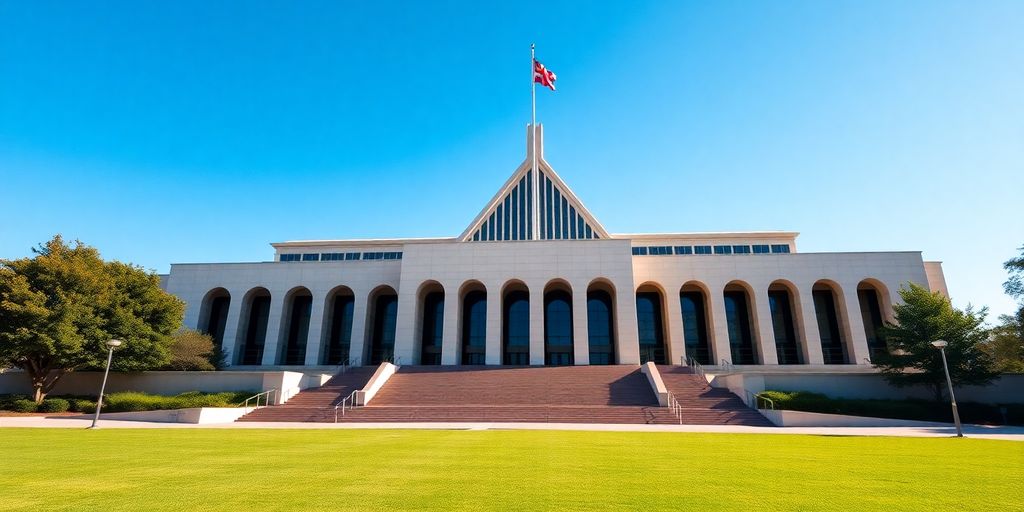
Australia’s government setup is pretty interesting, and it all starts with the idea of a federation. Basically, the country isn’t just one big unit; it’s made up of six states and a couple of self-governing territories. Each of these has its own government, with its own parliament and laws, kind of like mini-countries within the larger one. Then you have the federal government, which handles national stuff. Think of it as the main office that deals with things affecting everyone across the board, like defense or foreign policy. It’s all based in Canberra, by the way.
The Federation: States and Territories
So, Australia is a federation. This means power is split between the national government and the state and territory governments. Each state and territory has its own constitution, parliament, and laws. This division of power is a big deal because it shapes how laws are made and how services are delivered. It’s a system that’s been in place for a long time, and it means you’ve got different levels of government to deal with depending on what issue you’re looking at. It’s a bit like having different departments in a large company, each with its own responsibilities.
The Federal Government’s Role
The federal government, often just called the Commonwealth Government, is the central authority. It’s responsible for matters that affect the entire nation. This includes things like national defense, foreign relations, currency, and immigration. While states and territories handle local issues, the federal government steps in for the big picture stuff. It’s the government that most people think of when they talk about national policies and laws. The federal government’s powers are outlined in the Australian Constitution, which is the rulebook for how the country is run. You can find more about the structure of the federal government on the Parliament of Australia website.
Separation of Powers: Legislature, Executive, Judiciary
Australia’s system is built on a separation of powers, which is a way to prevent any one part of the government from becoming too powerful. There are three main branches: the Legislature, the Executive, and the Judiciary. The Legislature, which is Parliament, makes the laws. The Executive, led by the Prime Minister and Cabinet, carries out and enforces those laws. And the Judiciary, headed by the High Court, interprets the laws and settles legal disputes. The idea is that these three branches keep each other in check, sort of like a three-legged stool. This separation is a key feature of how Australia’s government operates, aiming for balance and fairness in decision-making.
The principle of separating government powers is designed to stop any single group from having too much control. It creates a system where different bodies have distinct roles, and they can watch over each other to make sure things are done properly and fairly.
Parliamentary and Responsible Government
Australia runs on a system that’s both parliamentary and responsible. What does that actually mean for us? Well, ‘parliamentary government’ basically says that the people running the country, the executive, come from within the parliament itself. Think of it like this: the folks making the laws and the folks carrying them out are largely the same group of people, drawn from the elected representatives. This is a key feature of the Westminster system, which Australia adopted from the UK. It’s different from places like the United States, where the executive branch is more separate.
The Westminster System Explained
The Westminster system is the foundation of Australia’s government structure. It’s a model that emphasizes the connection between the legislature and the executive. The core idea is that the executive government must maintain the confidence of the parliament to stay in power. This means the Prime Minister and their ministers are usually members of parliament, typically the House of Representatives. This setup creates a close working relationship, but also means the executive is constantly under the watchful eye of the legislature. It’s a bit like having your boss also be your teacher – they’re involved in everything!
Executive Drawn from Parliament
So, how does this ‘drawn from parliament’ thing work in practice? After an election, the political party or coalition that wins a majority of seats in the House of Representatives gets to form the government. The leader of that winning group becomes the Prime Minister. The ministers who make up the cabinet are also chosen from among the elected members of parliament. This direct link means the government is supposed to be closely aligned with the will of the people as expressed through their representatives. It’s a system that, in theory, keeps things pretty connected.
Accountability to the Legislature
This brings us to the ‘responsible government’ part. Because the executive is drawn from parliament, they are directly accountable to it. This accountability happens in a few ways. Ministers have to answer questions from other members of parliament, especially during Question Time, which can get pretty lively. The opposition party, which is the largest group not in government, plays a big role here. They scrutinize the government’s actions and policies, holding them to account. If the government loses the confidence of the parliament – meaning it can’t get enough support to pass laws or survive a no-confidence vote – it usually has to resign or call an election. This constant need for parliamentary approval is a major check on executive power, making sure the government doesn’t just do whatever it wants. You can see how this system ensures that the executive government is accountable to the parliament in Australia.
The relationship between the executive and the legislature is dynamic. While the government might control the lower house, the Senate often has a different makeup, providing an additional layer of scrutiny and challenge to government proposals. This can lead to more negotiation and compromise, or sometimes, political deadlock.
Forming the Government
So, how does a government actually get put together after an election? It’s not just about counting votes; there’s a whole process involved. The political party or coalition that wins the majority of seats in the House of Representatives is the one that gets to form the government. Their leader then becomes the Prime Minister. It’s pretty straightforward in theory, but sometimes things get a bit complicated.
Election Outcomes and Majority Rule
After the votes are tallied, the party or coalition that secures more than half the seats in the House of Representatives is typically invited by the Governor-General to form government. This majority gives them the mandate to govern. If no single party wins an outright majority, then parties might try to form a coalition by joining forces to reach that magic number. It’s all about having enough support to pass laws and manage the country.
The Role of the Opposition
What happens to the parties that don’t win the majority? They become the Opposition. The main opposition party, usually the one with the second-highest number of seats, has a really important job. They’re there to question the government, scrutinize its decisions, and offer alternative policies. It’s a vital part of keeping the government in check and making sure different viewpoints are heard. Think of them as the government’s official critics.
Checks and Balances in Practice
Australia’s system has built-in ways to prevent any one part of the government from becoming too powerful. This is where checks and balances come in. The Opposition plays a big role here, but it’s also about how the different branches of government interact. For instance, the Parliament (the lawmakers) keeps an eye on the Executive (the people running things), and the Judiciary (the judges) can review laws. It’s a bit like a constant conversation and sometimes a bit of a tug-of-war to keep everything fair and balanced.
The Executive Government in Practice
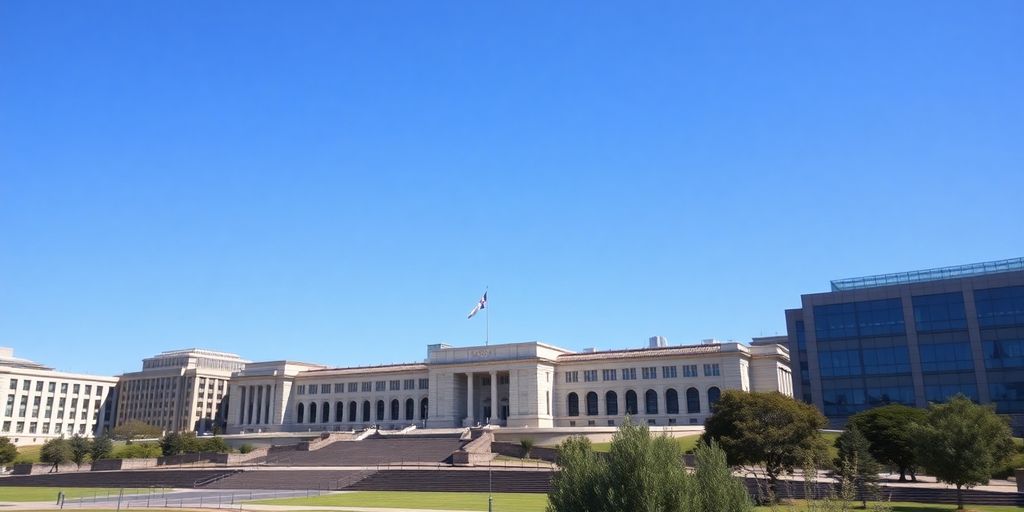
So, how does the actual day-to-day running of the country happen? It all comes down to the Prime Minister and their Cabinet. These are the folks who really make the big decisions. The Prime Minister leads the government and is usually the leader of the political party that won the most seats in the House of Representatives. They then pick senior members of their party to be ministers, forming the Cabinet. Think of the Cabinet as the main decision-making group for all major policies and laws the government wants to put forward.
The Prime Minister and Cabinet
The Prime Minister is the head of the executive government. They are not directly elected to that role by the people, but rather appointed by the Governor-General based on who can command the confidence of the House of Representatives. The Cabinet, made up of the most senior ministers, is where the really important policy discussions happen. It’s not actually mentioned in the Constitution, which is kind of wild when you think about it – the people who wrote the Constitution just assumed it would exist!
The Ministry and Parliamentary Secretaries
Beyond the Cabinet, there’s the wider Ministry, which includes all the ministers and parliamentary secretaries (sometimes called assistant ministers). Legislation allows for a pretty large number of these positions, and they are chosen from both the House of Representatives and the Senate, though most ministers come from the lower house. Each minister is responsible for a specific government department, like Health or Treasury. Parliamentary secretaries help ministers with their duties.
The Federal Executive Council’s Function
This might sound a bit formal, but the Federal Executive Council is the official way ministers give advice to the Governor-General. It’s not a place for debating policy; it’s more about making things official. All ministers and parliamentary secretaries are members. When something needs a formal sign-off, like making a new regulation or appointing someone to a position, it goes through the Council. While it might seem like just a formality, it makes sure everything is properly documented and legally sound. The Governor-General presides over these meetings, often with just a couple of ministers present to make it official. It’s a key step in the process of making government decisions.
The Role of the Governor-General
So, who actually represents the King in Australia? That’s where the Governor-General comes in. Think of them as the King’s stand-in, handling a lot of the day-to-day constitutional duties here. It’s a pretty important job, and it involves a mix of ceremonial stuff and actual executive powers. The Governor-General acts on the advice of the Prime Minister and ministers for most things, but there are a few special situations where they can use their own judgment.
Ceremonial Head of State
The Governor-General does a lot of the public-facing duties that you might associate with a head of state. This includes things like opening Parliament, giving speeches, and attending national events. They’re basically the face of the Crown in Australia, representing the King at various functions and ceremonies. It’s a role that requires a good deal of public presence and diplomacy. They also swear in new Prime Ministers and ministers, which is a pretty significant moment in our political system. It’s a bit like being the host of the country, making sure everything runs smoothly on a formal level.
Executive Powers and Advice
When it comes to the actual running of the government, the Governor-General has a hand in a few key areas. They give what’s called Royal Assent to laws passed by Parliament, which is basically the final sign-off that makes a bill an Act. They also issue writs for elections, meaning they officially start the process for an election to happen. Most of these actions are done based on the advice from the elected government, particularly the Prime Minister. It’s a way to ensure that the executive government’s decisions are formally recognized and enacted. The Federal Executive Council is the formal body where ministers present recommendations to the Governor-General for approval, like making regulations or appointing people to positions. This process helps document and validate government actions, making sure they’re legally sound. You can find more details about the Governor-General’s role on the official Governor-General of Australia website.
Reserve Powers and Dissolution
Now, this is where things get a bit more interesting. The Governor-General has what are called ‘reserve powers’. These are powers that, in certain, very specific circumstances, can be used without the advice of the Prime Minister. The most well-known of these is the power to dissolve Parliament and call an election. This isn’t something that happens often, and it’s usually only considered in times of serious political deadlock or constitutional crisis. The exact boundaries of these reserve powers aren’t always crystal clear and can be a subject of debate among constitutional experts. It’s a safeguard, meant to be used only in exceptional situations to protect the functioning of government.
The Judiciary and Constitutional Interpretation
Australia’s legal system is built on a foundation where laws are interpreted and applied by a separate branch of government – the judiciary. This branch is designed to be independent, meaning judges can make decisions without pressure from politicians or anyone else. This independence is a big deal because it helps keep the government in check and makes sure laws are fair.
The High Court’s Authority
The High Court of Australia is the top court in the country. It’s the ultimate interpreter of the Constitution. This means if there’s a question about whether a law passed by Parliament is allowed under the Constitution, the High Court has the final say. They can strike down laws if they go against the Constitution, which is a pretty significant power. It’s like the ultimate referee for all the laws in Australia.
Judicial Independence
This independence is really important for how Australia is run. It means judges can do their jobs without worrying about upsetting the government or public opinion. They just have to follow the law and the Constitution. This separation of powers, where the legislature makes laws, the executive enforces them, and the judiciary interprets them, is a core part of Australia’s system. It stops any one part of the government from becoming too powerful.
Appointing and Removing Judges
So, how do judges get their jobs, and how do they leave them? Judges in federal courts, including the High Court, are appointed by the Governor-General. This happens based on advice from the Prime Minister and the Cabinet. It’s not a quick process, and it’s meant to ensure qualified people get the positions. Now, getting rid of a judge is a much harder thing to do. A judge can only be removed if both the House of Representatives and the Senate agree that the judge has behaved badly or is unable to do their job. This is a protection to make sure judges aren’t removed just because someone disagrees with their decisions.
The Monarch’s Role in Australia
Australia is a constitutional monarchy, which means our head of state isn’t elected but inherits the position. Right now, that’s King Charles III. It’s a bit of a unique setup because while the King is technically the head of state, his powers here in Australia are mostly handled by the Governor-General. Think of the King as the ultimate figurehead, but the day-to-day stuff, the actual governing powers, are delegated. The Constitution does mention the King can disallow Australian laws, but honestly, that’s never really happened and probably won’t. It’s more of a historical nod than a practical power these days.
Constitutional Monarchy Defined
Basically, a constitutional monarchy is a system where the monarch’s authority is limited by a constitution or laws. The King or Queen is the head of state, but they don’t run the country day-to-day. That job falls to the elected government, like our Prime Minister and Cabinet. It’s a way to have a symbolic leader while still having a government that’s accountable to the people.
The King as Head of State
So, King Charles III is our head of state. This role is separate from his role as King of the UK, even though it’s the same person. His duties as Australia’s head of state are mostly ceremonial and symbolic. He’s the person on the money and the one whose name is on official documents, but he doesn’t make policy decisions or run government departments. That’s all handled by the Australian government.
Delegated Powers to the Governor-General
This is where it gets interesting. The Australian Constitution says the King’s powers are given to the Governor-General, who is the King’s representative in Australia. So, when you see the Governor-General opening Parliament or signing laws, they’re acting on behalf of the King. The King appoints the Governor-General, but he does that on the advice of the Australian Prime Minister. It’s a clear example of how the real power rests with our elected officials, not the monarch.
Wrapping It Up
So, that’s a quick look at how the Australian government works. It’s a pretty complex system with different parts like the Parliament that makes laws, the Executive that carries them out, and the courts that sort out any issues. Remember, the King is the head of state, but the Governor-General handles most of the day-to-day stuff, acting on advice from the Prime Minister and ministers. It’s all about checks and balances to keep things running smoothly. Understanding these basics can make dealing with government a bit less confusing. It’s a lot to take in, but knowing who does what is a good start.
Frequently Asked Questions
What is the basic structure of the Australian government?
Australia is a federation, which means it’s made up of states and territories, and the national government works with these different parts. The main government, called the Federal Government, is based in Canberra. Each state and territory has its own government, parliament, and laws, similar to the national setup.
What does it mean that Australia has a parliamentary and responsible government?
Australia follows a parliamentary system where the people who run the country (the Executive) are chosen from the members of Parliament. This means the government has to answer to Parliament for its actions. It’s a bit like the UK system, but different from countries like the United States where the leaders are separate from the law-making body.
How is the government formed after an election?
After an election, the political party that wins the most seats in the House of Representatives forms the government. The leader of that party becomes the Prime Minister. The party with the next most seats becomes the official Opposition, whose job is to question and challenge the government’s decisions.
Who are the key players in the Executive Government?
The Prime Minister and their top ministers make up the Cabinet, which is the main group for deciding on new policies and laws. While the Constitution doesn’t directly mention the Prime Minister or Cabinet, their power comes from being part of the Federal Executive Council, being chosen by the people, and by tradition.
What is the role of the Governor-General?
The Governor-General is the King’s representative in Australia and acts as the ceremonial head of state. They have important powers, like approving laws and calling elections, but usually act on the advice of the Prime Minister. They also have special ‘reserve powers’ that can be used in unusual situations.
What does the High Court do, and why is judicial independence important?
The High Court is the highest court in Australia and its main job is to explain what the Constitution means. If a law passed by Parliament goes against the Constitution, the High Court can say it’s invalid. Judges are appointed and can only be removed with a special process involving both Houses of Parliament, ensuring they can do their job without being pressured.