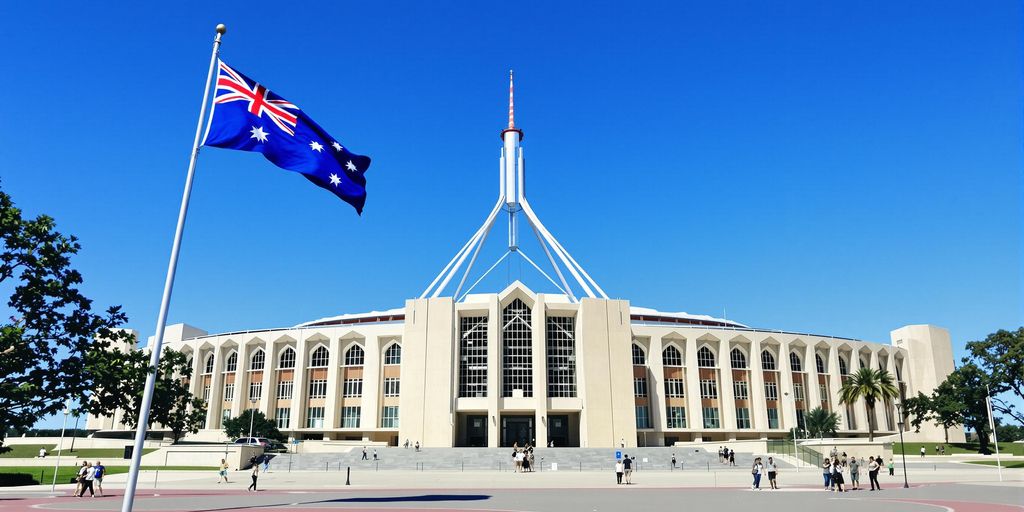
Thinking about how the Australian government works can seem pretty complex. It’s a system with different parts all doing their own jobs, and understanding these roles helps make sense of it all. This guide breaks down the main pieces of the Australian government, from who makes the laws to who runs the country day-to-day. We’ll look at the big picture and some specific functions to give you a clearer idea of how things operate.
Key Takeaways
- Australia has a federal system, meaning power is shared between the national government and state/territory governments.
- The government’s powers are split into three branches: legislative (making laws), executive (carrying out laws), and judicial (interpreting laws).
- The Australian Parliament is made up of the King (represented by the Governor-General), the House of Representatives, and the Senate.
- The executive power is held by the Prime Minister and Cabinet, who are drawn from Parliament.
- The Governor-General acts as the King’s representative, performing ceremonial duties and exercising certain powers, often on the advice of the government.
Understanding the Australian Government Structure
Australia’s government is set up as a federation, which means power is shared between the national government and the governments of the six states and two territories. Think of it like a big family where the parents (federal government) handle national issues, and the older kids (state/territory governments) manage things in their own rooms. This setup is pretty standard for countries with a lot of land and diverse populations.
The Federal System: States and Territories
So, Australia isn’t just one big blob governed from the top. It’s divided into six states – New South Wales, Victoria, Queensland, South Australia, Western Australia, and Tasmania – plus two self-governing territories: the Australian Capital Territory (ACT) and the Northern Territory (NT). Each of these has its own government, its own parliament, and its own laws. They handle things like local roads, schools, and hospitals, while the federal government deals with national defense, immigration, and currency. It’s a way to keep things manageable and responsive to local needs.
Separation of Powers: Legislature, Executive, Judiciary
To stop any one group from getting too much power, Australia follows a principle called the separation of powers. It divides the government’s jobs into three main branches: the Legislature, the Executive, and the Judiciary. The Legislature, which is Parliament, makes the laws. The Executive, led by the Prime Minister and Cabinet, carries out and enforces those laws. And the Judiciary, headed by the High Court, interprets the laws and settles disputes. Ideally, these branches operate independently, acting as checks and balances on each other. It’s like having a referee, the players, and the rulebook all separate but working together for the game.
Parliamentary and Responsible Government
Australia’s system is also described as a parliamentary and responsible government. ‘Parliamentary’ means the people running the government (the Executive) are actually members of Parliament. They come from the elected representatives. ‘Responsible’ means the Executive government has to answer to Parliament for its actions. If they lose the confidence of Parliament, they can be removed. This is different from systems where the executive is completely separate from the legislature, like in the United States. It means the government is always accountable to the people’s representatives.
The Legislative Branch: Parliament’s Role
Australia’s government has a legislative branch, and that’s Parliament. It’s where the laws that govern the country are actually made. Think of it as the engine room for new legislation. Parliament is made up of the King, represented by the Governor-General, and two houses: the House of Representatives and the Senate. For a proposed law, called a bill, to become an actual law, it has to get approved by both of these houses. They have pretty much the same power, though the Senate has some limits when it comes to introducing or changing certain money-related bills. Once both houses agree, the Governor-General gives it the final nod, and boom, it’s law. Besides making laws, Parliament also gives the green light for the government to spend public money, keeps an eye on what the executive government is doing, and serves as a place where important public issues are discussed.
Composition of Parliament: King, Governor-General, and Two Houses
Australia is a constitutional monarchy, meaning our head of state is the King. Right now, that’s King Charles III. However, the King’s powers in Australia are mostly handled by his representative, the Governor-General. The King’s main constitutional job here is appointing the Governor-General, and even then, he takes advice from the Australian Prime Minister. The Governor-General is the one who officially represents the King and carries out many of the head of state duties. The real law-making happens in the two houses: the House of Representatives, where members are elected based on population, and the Senate, which has equal representation for each state. Both houses have to agree on a bill for it to become law, which is a key part of how laws are made in Australia.
The Law-Making Process
The journey of a bill from an idea to a law is a pretty structured process. It usually starts in one of the houses, often the House of Representatives. After introduction, it gets debated, and members can suggest changes. If it passes the first house, it moves to the other house, where the whole process of debate and potential amendment happens again. If both houses pass the bill in the same form, it then goes to the Governor-General for Royal Assent. This is the final step that makes it an Act of Parliament. It’s a system designed to allow for thorough discussion and scrutiny of proposed laws, as detailed in Infosheet No. 7 Making laws.
Parliamentary Scrutiny and Public Debate
Parliament isn’t just about passing laws; it’s also a vital place for holding the government accountable. Members of Parliament, especially those in opposition, question ministers and scrutinize the actions of the executive government. This scrutiny is a core part of the system. The government needs the support of the majority in the House of Representatives to govern, but often doesn’t have a majority in the Senate. This can mean that the government’s proposals might be challenged or changed, providing a check on its power. Public debate within Parliament is also important for discussing policy and informing the public about government actions. The opposition plays a big role here, providing a counterpoint to the government’s agenda.
The Executive Branch: Governing the Nation
The Executive Branch is basically the part of the government that actually does things – it runs the country day-to-day. Think of it as the engine room. It’s made up of the Prime Minister and all the ministers, who are in charge of different government departments like Health or Defence.
The Prime Minister and Cabinet
The Prime Minister is the head of the executive government. They’re usually the leader of the political party that wins the most seats in the House of Representatives. The Prime Minister picks the ministers, who are also members of Parliament, to head up different areas. These senior ministers, along with the PM, form the Cabinet. The Cabinet is where all the big decisions get made about government policy and what laws will be proposed. It’s not actually mentioned in the Constitution, which is kind of wild, but it’s how things have worked for ages.
The Role of Ministers and Parliamentary Secretaries
Ministers are the folks in charge of specific government departments. So, you’ll have a Minister for Finance, a Minister for Foreign Affairs, and so on. They’re responsible for making sure their department runs smoothly and carries out the government’s plans. Parliamentary Secretaries, sometimes called Assistant Ministers, help the ministers out. They’re like junior ministers, assisting with the workload and often representing their minister in Parliament.
The Federal Executive Council
This sounds pretty official, and it is. The Federal Executive Council is the formal body that advises the Governor-General. All ministers and parliamentary secretaries are members, and they get to use the title ‘Honourable’. However, the whole council never actually meets. Instead, a small group of ministers get together with the Governor-General (or their deputy) to formally approve things like making new regulations, signing off on treaties, or appointing people to certain jobs. It’s more of a procedural step to make sure everything is done properly and legally, rather than a place for big debates.
The Head of State: The Governor-General’s Functions
So, Australia has a King as its head of state, but that’s mostly a symbolic thing. The actual day-to-day work of being the head of state falls to the Governor-General. Think of them as the King’s representative here in Australia. It’s a pretty interesting role, blending official duties with some serious constitutional responsibilities. They’re not just there for fancy ceremonies, though those are part of it. The Governor-General is involved in making sure the government runs according to the rules.
Ceremonial Duties and Constitutional Representation
The Governor-General does a lot of the public-facing stuff. This includes things like opening Parliament, giving Royal Assent to bills (which makes them laws), and representing Australia at important events, both here and overseas. They’re also the commander-in-chief of the Australian Defence Force, which sounds pretty grand. It’s all about upholding the constitution and acting as the formal symbol of the nation’s authority. It’s a role that requires a lot of dignity and a good grasp of how things work.
Executive Powers and Delegated Authority
Beyond the ceremonies, the Governor-General has actual executive powers. A lot of these are exercised on the advice of the Prime Minister and ministers. For example, they approve regulations and make appointments to various positions. It’s like they’re the final sign-off on many government actions. The Federal Executive Council is the formal way ministers give this advice to the Governor-General. It’s not a place for big debates, more like a formal process to make sure everything is documented correctly and legally sound. The Governor-General also has the power to issue writs for elections, which is a pretty big deal in the democratic process. They also initiate government expenditure by recommending appropriations to Parliament, which is how public money gets allocated.
Reserve Powers and Independent Action
Now, this is where it gets a bit more complex. The Governor-General has what are called ‘reserve powers’. These are powers they can use without needing advice from the Prime Minister, though this is rare and usually only in exceptional circumstances. The most well-known of these is the power to dissolve Parliament, or even both Houses, which can trigger an election. These powers aren’t super clearly defined, and people don’t always agree on exactly when or how they should be used. It’s a safeguard, really, meant to be used only when the normal functioning of government breaks down. The Governor-General’s role is to represent the monarch, King Charles III, and perform the functions of head of state on his behalf. You can find more details about the Governor-General’s role at the Governor-General’s website.
The Judicial Branch: Interpreting Laws
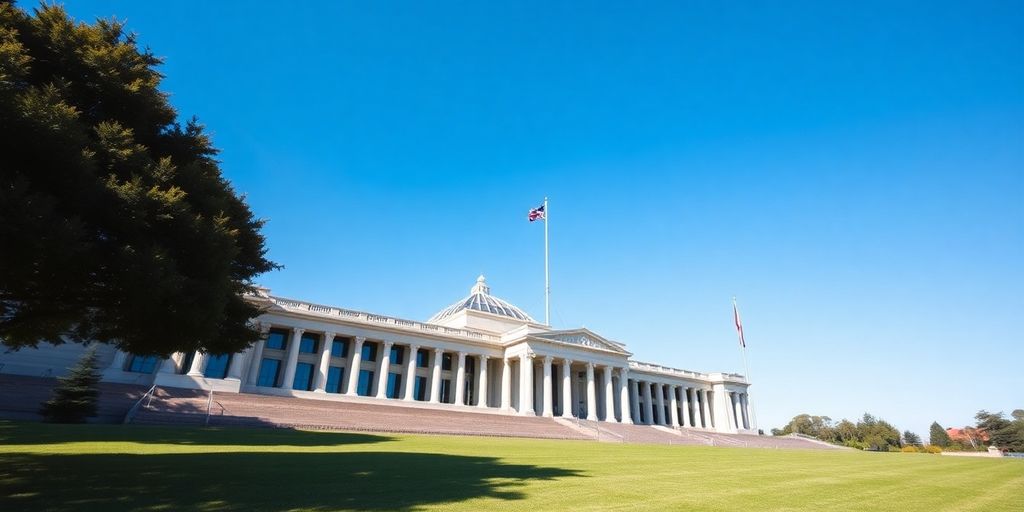
The judicial branch is all about making sure laws are followed correctly and figuring out what they mean. It’s a pretty important part of how the government works, keeping things fair and balanced.
The High Court and Federal Courts
Australia has a court system that’s set up in layers. At the top is the High Court, which is the highest court in the land. Then there are other federal courts that handle specific types of cases. These courts are where legal disputes get sorted out, and they have the final say on how laws are applied. It’s a complex setup, but it’s designed to handle all sorts of legal matters across the country. You can find out more about Australia’s court system at the federal court website.
Constitutional Interpretation and Judicial Review
One of the big jobs of the High Court is to look at the Constitution and decide if laws passed by Parliament fit within it. If a law goes against the Constitution, the High Court can say it’s invalid, meaning it can’t be enforced. This power, called judicial review, is a major check on the other branches of government. It means that no law is above the Constitution itself.
Judicial Independence and Accountability
Judges are appointed, not elected, and they’re meant to be free from outside pressure when they make decisions. This independence is key to making sure everyone gets a fair hearing. Judges can only be removed from their jobs if both houses of Parliament agree there’s a really good reason, like serious misconduct or not being able to do their job anymore. This system helps keep the judiciary accountable without letting politicians interfere with court decisions.
Forming Government and Opposition
So, after the votes are all counted, how does the actual government get put together? It’s pretty straightforward, really. The political party or group of parties that manages to get the most support in the House of Representatives is the one that gets to run the country. Their leader then becomes the Prime Minister. It’s a system that’s been around for ages, and it means the executive power is directly tied to who the people elect to the lower house. This is a core part of how Australia’s parliamentary system works, and it’s all about making sure the government has a mandate from the voters. You can find more details on this relationship in Infosheet No. 19, which talks about the House, government, and opposition.
Election Outcomes and Government Formation
Once an election wraps up, the focus shifts to who has enough seats to form a government. It’s not just about winning the most votes; it’s about securing a majority in the House of Representatives. If no single party achieves this, then coalitions or agreements between parties become necessary. This process determines who will hold the reins of power and lead the nation. It’s a bit like putting together a puzzle, where each piece needs to fit just right for the picture to be complete. The party or coalition that wins the majority in the House of Representatives forms the government. This structure is fundamental to the parliamentary system, determining who holds executive power and leads the country.
The Role of the Official Opposition
But what happens to the parties that don’t win? They form the Opposition. Specifically, the party or coalition that wins the second-highest number of seats becomes the Official Opposition, and its leader is known as the Leader of the Opposition. Their job isn’t just to sit there; it’s to scrutinize the government’s actions, offer alternative policies, and generally keep the government on its toes. It’s a really important role for a healthy democracy, providing that necessary check and balance. They are the government’s main critics, and their work helps to shape public policy and debate.
Checks and Balances in the System
This whole setup, with a government and an opposition, is a key part of Australia’s system of checks and balances. The government has to answer to Parliament, and the Opposition makes sure they do. Plus, remember the Senate? Because of how senators are elected, governments often don’t have a majority there, meaning they have to negotiate and compromise to get legislation passed. It’s a way to prevent any one group from having too much power.
The interplay between the elected government and the scrutinizing opposition, alongside the bicameral parliamentary structure, creates a dynamic environment where accountability and debate are constant features of governance.
Wrapping Up: Your Guide to Australian Government Services
So, that’s a look at how the Australian government is set up and some of the main services it provides. It might seem a bit complicated at first, with all the different parts like Parliament, the Executive, and the courts. But really, it’s all designed to work together, with checks and balances to keep things fair. Knowing who does what can make it easier to understand how decisions are made and how to access the help or information you need. It’s a system that’s been around for a while, and while it has its complexities, it’s the framework for how Australia is run day-to-day.
Frequently Asked Questions
What are the main parts of the Australian government?
Australia’s government is split into three main parts: the lawmakers (Parliament), the people who carry out and enforce the laws (Executive), and the judges who decide if laws apply correctly (Judiciary). This separation helps make sure no single part becomes too powerful.
Who makes up the Australian Parliament and how do laws get made?
The Australian Parliament is made up of the King (represented by the Governor-General) and two groups of lawmakers: the House of Representatives and the Senate. For a bill to become a law, both groups must agree on it, and then the Governor-General gives it final approval.
What does the Executive branch of the Australian government do?
The Executive branch is led by the Prime Minister and their Cabinet, who are usually chosen from members of Parliament. They are responsible for running the country day-to-day and making important decisions about government policies.
What is the role of the Governor-General?
The Governor-General is the King’s representative in Australia. They have important ceremonial duties, like opening Parliament, and also have some powers to act on their own in special situations, though usually they follow the advice of the Prime Minister.
What is the role of the High Court and why is judicial independence important?
The High Court is the highest court in Australia. Its main job is to interpret the Constitution and decide if laws made by Parliament follow it. Judges are chosen by the government but are independent, meaning they can make decisions without pressure.
How is the government formed in Australia, and what is the role of the Opposition?
After an election, the political party that wins the most seats in the House of Representatives forms the government, with its leader becoming Prime Minister. The party with the next most seats becomes the ‘Opposition,’ which questions and challenges the government’s actions, helping to keep the system balanced.