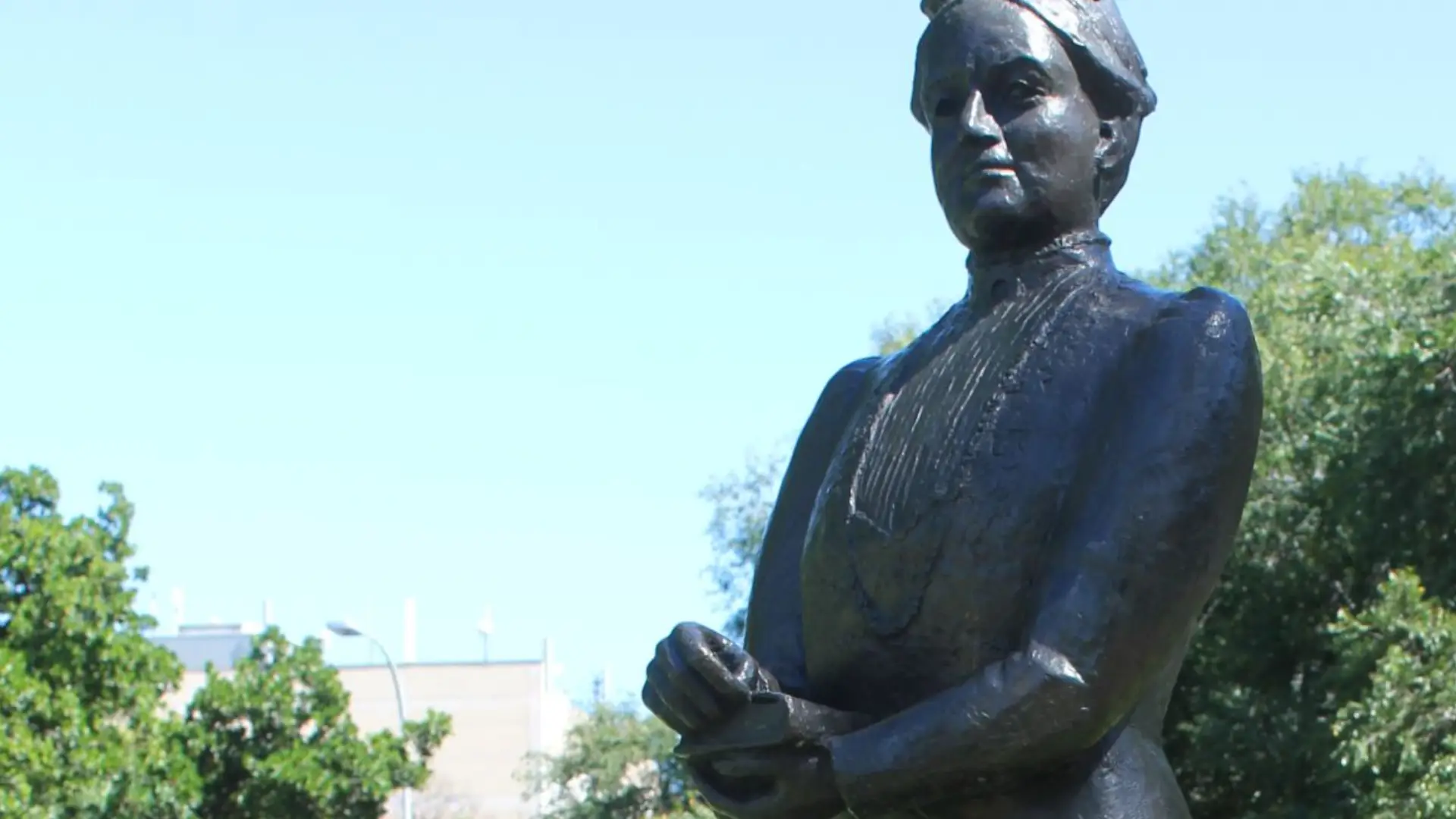
Edited by Susan Magarey
Wakefield Press | Hardback | 392pp | $39.95 | ISBN 1 86254 656 8
Over recent years there has been a welcome revival of interest in Catherine Helen Spence electoral reform, one of the most remarkable and influential women ever to have lived in Australia.
A journalist, social reformer, novelist, preacher, and pioneering political thinker, Spence was in the vanguard of first-wave feminism, advocating equality of opportunity for women and social justice for the poor and neglected. Celebrated during her lifetime as the “Grand Old Woman of Australia,” she championed women’s rights, lobbied for improved child welfare, and devoted much of her formidable intellect to the cause of electoral reform – the movement for proportional representation, or as she called it, “effective voting.”
From 1859 until her death in 1910, Spence campaigned tirelessly for a fairer electoral system, believing that true democracy could not exist without it. In 1897, she became the first woman in Australia to stand for political office, contesting a seat at the Federal Convention – a milestone that underscored both her courage and her vision.
A Rediscovered Voice
Ever Yours, C.H. Spence, edited by Susan Magarey and published by Wakefield Press, is an important reissue and expansion of Catherine Helen Spence: An Autobiography. This new edition supplements the original text with extensive footnotes, Spence’s 1894 diary, and a selection of her correspondence from the final decade of her life.
For readers already familiar with Spence’s autobiography, this edition adds a wealth of context and fresh insight. The new footnotes – meticulously prepared by Barbara Wall – illuminate the people, places, and issues that shaped Spence’s world. Wall’s scholarship, complemented by her comprehensive bibliography of Spence’s writings (available via the State Library of South Australia’s website at www.slsa.sa.gov.au/spence), makes this edition both an accessible introduction for newcomers and a valuable resource for researchers.
The 1894 Diary: A Year of Triumph and Transformation
Perhaps the most exciting addition to this volume is Spence’s recently rediscovered diary for 1894. It had long been thought that her journals – which she kept faithfully from her late twenties onward – had all been lost or destroyed. Magarey’s discovery of this surviving diary is nothing short of miraculous, providing a vivid and intimate portrait of Spence at a defining moment in her career.
The diary covers one of the most momentous years in Spence’s life. Having travelled to the Chicago World’s Fair in 1893, she remained in the United States for eleven months, delivering lectures on “effective voting” – and, significantly, being paid for them, an impressive feat for a woman lecturer at the time.
In 1894, she continued her travels through Britain and Europe, meeting reformers and campaigners while tirelessly promoting proportional representation. Returning to South Australia in December of that year, she found herself back home just in time to witness the passage of the Women’s Suffrage Bill, granting South Australian women the right to vote and to stand for Parliament – a reform she had long supported.
Through her diary entries, we see Spence’s mind at work: energetic, disciplined, and unwaveringly idealistic, even at the age of sixty-nine. Her reflections reveal not only her public ambitions but also the private resilience and intellectual independence that made her such a formidable force for change.
Letters from a Tireless Reformer
The volume also includes a selection of Spence’s letters to two of her many correspondents during the last decade of her life. Written between 1900 and 1910, these letters capture a woman who, despite advancing age, never ceased to campaign for electoral reform and social progress.
They show her as both mentor and colleague – warm, witty, and deeply engaged with the political and moral questions of her day. Her correspondence demonstrates how deeply she believed that electoral systems could shape societies and that democracy could not thrive on inequality or exclusion.
A Rich Historical and Human Record
While supporters of proportional representation will find in this book a rich record of the origins of their cause, Ever Yours, C.H. Spence offers much more than a study in political history. It opens a window onto nineteenth-century South Australian life, the emergence of women’s public voices, and the international networks of reformers that connected Adelaide, London, and Chicago.
Spence’s observations – on travel, education, social class, and faith – bring texture to an era often seen only through official records. Her writing, whether in autobiography, diary, or correspondence, is candid and thoughtful, filled with both conviction and compassion.
Editorial Excellence and Scholarly Depth
Editor Susan Magarey, a leading scholar of Australian feminist history and the founder of the Australian Feminist Studies journal, has done an exemplary job in contextualising and presenting Spence’s work. The annotations are detailed but unobtrusive, and the inclusion of primary materials makes the book both a literary rediscovery and a document of national significance.
The design and production by Wakefield Press match the quality of the scholarship – elegant, readable, and respectful of the historical material. At nearly 400 pages, the book is both substantial and inviting, offering readers a sense of intimacy with Spence’s voice.
A Legacy Renewed
Catherine Helen Spence was far ahead of her time – a thinker who refused to accept the limits placed on her gender or her society. She believed that ideas, if just, could transcend generations.
With Ever Yours, C.H. Spence, Susan Magarey has ensured that Spence’s words and ideals continue to speak to ours. The rediscovered diary and letters remind us that the struggle for fair representation and social justice – causes she championed for over half a century – remain unfinished.
This is more than a biography or a historical curiosity; it is a conversation across time, a reminder of the courage and intellect that helped shape modern Australia.
Leave a Reply